Difference Between Bowers Wilkins Px8 S2 and Denon Home Sound Bar 550 Explained
Introduction
Comparing the Bowers & Wilkins Px8 S2 and the Denon Home Sound Bar 550 is not a straight apples-to-apples exercise: one is a pair of luxury over-ear headphones designed for private, detailed listening; the other is a compact sound bar that aims to deliver room-filling home theater and TV clarity. Buyers often ask which offers “better sound” or which is the “better buy.” The right answer depends on context—how and where the audio will be used, the listener’s priorities (privacy, immersion, dialogue clarity, portability), and the rest of the listening setup.
This article explains the practical differences between these two products, focusing on real-world use cases, what typical buyers care about, and guidance to help readers choose the device that best matches their needs.
Product overviews
Bowers & Wilkins Px8 S2 (high-level)
The Bowers & Wilkins Px8 S2 is positioned as a premium over-ear active noise-cancelling (ANC) headphone. It targets listeners who want high-fidelity personal audio: music lovers who commute, frequent travelers, or anyone wanting an immersive, private listening experience. Expect attention to materials and build, refined tuning aimed at accurate tonal balance, and features that center on wireless convenience plus noise control.
Denon Home Sound Bar 550 (high-level)
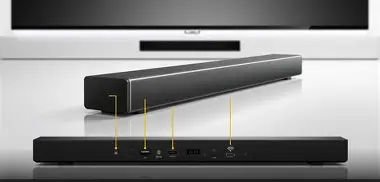
The Denon Home Sound Bar 550 is a compact sound bar intended to upgrade TV audio and provide a single-component speaker for movies, series, and music in the living room or bedroom. It targets buyers who want better dialogue clarity, more impactful bass than built-in TV speakers, and an integrated streaming and smart-home-friendly feature set. It’s designed for shared listening, room placement, and simple setup with modern TVs.
Detailed product analysis
Intended use and listening context
These products serve different environments. The Px8 S2 excels for personal, focused listening—commuting, flying, or at a desk—where noise isolation or cancellation is key. Headphones deliver a very direct presentation and isolate the listener from ambient noise. That matters for work-from-home professionals who need concentration, travelers battling engine noise, and audiophiles who want to hear subtle details without room acoustics interfering.
The Denon Home Sound Bar 550 is built for shared listening in a room. It improves TV dialogue, creates a more enveloping cinematic sense for films and shows, and can serve as a compact music system for casual listening or parties. Its performance depends on room size and placement; unlike headphones, sound bars interact with room acoustics, which can either enhance or limit perceived impact.
Sound signature and tonal balance
Bowers & Wilkins historically tunes products toward a balanced, refined sound with a focus on midrange accuracy and natural timbre. The Px8 S2 aims to deliver clear mids and well-controlled highs for detail, with bass that supports rather than overwhelms. The combination of closed-back design and ANC will change perceived bass and soundstage compared with open listening in a room, often making mixes feel intimate and immediate.
The Denon sound bar is designed to emphasize dialogue clarity and a satisfying low end for on-screen effects. Sound bars typically give a wider, more outward soundstage than headphones—intended to fill a living room. Denon often balances warmth and clarity so that speech is intelligible while music and effects retain weight. In a small-to-medium room, the sound bar will create a convincing sense of immersion, but the listening experience is less detailed and more “holistic” than the critical listening a premium headphone provides.
Noise handling and isolation
For private listening, the Px8 S2’s active noise cancellation and physical earcup seal are central. ANC reduces continuous background noise (aircraft engines, HVAC systems) and, combined with passive isolation, improves perceived detail at lower volumes. This feature is key for commuters and travelers.

The Denon Home Sound Bar 550 has no ANC—room noise affects everyone equally. Its closest analogue is voice-enhancement or dialogue modes that help speech stand out against ambient room noise or TV soundtracks, which is useful for shows and news. Buyers who need to control what others hear (late-night viewing, shared spaces) will prefer headphones.
Discover deals on Audio & Headphones — updated daily.
See Deals →Connectivity and ecosystem
Headphones like the Px8 S2 focus on Bluetooth wireless codecs, multipoint pairing, a wired option for flights or lossless sources, and USB connectivity for digital audio. Premium headphone apps provide EQ customization and firmware updates. Compatibility with mobile phones and tablets is a priority.
The Denon sound bar emphasizes TV-centric connections: HDMI with eARC for full-resolution audio from modern TVs, optical input for older TVs, Bluetooth and AirPlay/Chromecast/HEOS compatibility for streaming, and optional wireless subwoofer or rear speakers to expand to a fuller multichannel setup. Integration with voice assistants and multiroom platforms is often a selling point for living-room buyers.
Portability and setup
Px8 S2 is portable, with a folding or travel-friendly design and onboard controls for playback and calls. It requires minimal setup—pairing with a phone or laptop—and is self-contained.
Denon Home Sound Bar 550 requires installation under or near a TV, cables, and possibly pairing with a subwoofer or rear speakers. Placement matters: a sound ba…
Pros & Cons
Bowers & Wilkins Px8 S2
- Pros: Premium build and materials; strong noise cancellation and passive isolation; detailed, balanced sound for personal listening; portable and convenient for travel; private listening and call functionality.
- Cons: Single-listener experience—does not serve shared rooms; depends on battery for wireless operation; soundstage is “in-head” versus room-filling; can be expensive compared with mainstream wireless headphones.
Denon Home Sound Bar 550
- Pros: Significantly better TV dialogue and on-screen clarity than many built-in TV speakers; room-filling sound for shared listening; modern connectivity (HDMI eARC, streaming protocols); expandable with a subwoofer or rear speakers; simple living-room integration.
- Cons: Less detailed than premium headphones for critical listening; performance depends on room acoustics and placement; not portable; may require extra purchase (subwoofer) for deep bass.
Side-by-side comparison
| Feature | Bowers & Wilkins Px8 S2 | Denon Home Sound Bar 550 |
|---|---|---|
| Product type | Premium over-ear wireless headphones | Compact TV sound bar (home audio) |
| Primary use | Personal listening, travel, concentrated music enjoyment | TV/movies, room-filling music, shared listening |
| Sound focus | Detail, midrange accuracy, intimate soundstage | Dialogue clarity, cinematic impact, wider room soundstage |
| Noise handling | Active noise cancellation + passive isolation | No ANC; voice/dialogue enhancement modes |
| Connectivity | Bluetooth (high-quality codecs), wired USB/analog options | HDMI eARC, optical, Bluetooth, AirPlay/streaming protocols |
| Portability | High—designed for travel | Low—intended for fixed home setup |
| Setup complexity | Minimal—pair to devices | Moderate—placement, cabling, and optional expansion |
| Best for | Commuters, travelers, people who value privacy and detailed music | Home theater lovers, people who want better TV audio and shared music |
Real-world use cases and buyer priorities
Understanding how each device is used in everyday life helps clarify the decision:
- Urban commuter who values quiet and music detail: Px8 S2. Noise cancellation, compact portability, and headphone comfort are significant for short and long commutes. The user can lower volume while retaining clarity, protecting hearing over time.
- Working professional needing focus at home: Px8 S2. Headphone isolation reduces distractions during calls or concentrated work sessions.
- Small apartment couple watching TV together: Denon Home Sound Bar 550. Better dialogue and cinematic presence for two or more listeners without disturbing neighbors as much as a full home theater might.
- Single-person living room where movies are a priority: Denon Home Sound Bar 550, possibly with a wireless subwoofer added to increase impact.
- Music enthusiast who occasionally wants to share tracks: Both have limits—Px8 S2 is ideal for private critical listening, Denon allows group listening but won’t match headphone-level detail.
Buying guide: How to choose between them
When deciding between the Px8 S2 and the Denon Home Sound Bar 550, buyers should weigh these factors:
1. Use case: personal vs. shared listening
Decide who will listen and where. For private, immersive listening, choose headphones. For shared living-room experiences, choose the sound bar.
2. Room size and acoustics
A sound bar’s perceived performance varies with room size, furniture placement, and wall reflections. Small to medium rooms are best for compact sound bars; larger rooms may require additional speakers or a dedicated AV receiver.
3. Mobility and convenience
If the user travels, headphones win hands down. They are self-contained, battery-powered, and designed for on-the-go convenience. Sound bars remain stationary and involve cables and TV integration.
Find top-rated Audio & Headphones products at great prices.
View Offers →4. Dialogue clarity vs. critical music fidelity
TV watchers who struggle to hear speech clearly should prioritize a sound bar with a dedicated center or dialogue enhancement. Music listeners who desire instrumental separation, micro-dynamics, and critical listening should lean toward high-end headphones.
5. Connectivity and ecosystem compatibility
Check what devices are in use: modern TVs benefit from HDMI eARC to transmit high-quality audio to a sound bar. If the user streams primarily from a phone, headphone wireless codecs and low-latency behavior may matter more. Also consider whether the user prefers a particular multiroom platform or voice assistant integration.
6. Expansion and future upgrades
A sound bar can often be expanded with a subwoofer and rear speakers for a fuller experience. Headphones can be complemented by DACs or higher-resolution sources but are less modular in home cinema terms. Decide whether scalability matters.
7. Budget and value
Both product categories have a range of prices. Buyers should look at total cost of ownership: a sound bar plus optional subwoofer and rear speakers may exceed the cost of high-end headphones, but it delivers a different kind of experience. Consider whether the expense aligns with the primary use.
8. Comfort and long-term wear
Headphone comfort is critical for long listening sessions. Buyers should evaluate clamping force, earcup padding, and weight. Sound bars do not impose physical wear on the listener, but long-term satisfaction ties back to room integration and how often it is used.
Practical tips for buyers
- Listen before buying when possible. Headphones and sound bars behave differently in a demo; try both with familiar music or a favorite movie.
- Consider returns policies and trial periods, especially for expensive gear—real-world listening at home is the best test.
- For sound bar buyers, budget for a subwoofer if bass impact matters. Placing the subwoofer in the room corner often enhances perceived bass.
- For headphone buyers, check app support for firmware updates and EQ, and ensure the fit is comfortable for long sessions.
- Pay attention to latency if planning to use headphones for gaming or TV—low-latency modes or wired connections reduce lip-sync issues.
Conclusion
The Bowers & Wilkins Px8 S2 and the Denon Home Sound Bar 550 occupy different parts of the audio landscape. The Px8 S2 is a specialist tool for private, high-fidelity listening with noise cancellation and portability at its core. The Denon Home Sound Bar 550 is a living-room workhorse that improves TV dialogue and creates a shared cinematic experience with the possibility of expansion.
Choosing between them hinges on use case: choose headphones for personal listening, travel, and noise control; choose the sound bar for better TV audio and room-based entertainment. Many households find value in both—a sound bar for communal viewing and a pair of headphones for focused listening—but one will naturally align better with a buyer’s daily habits and priorities. Buyers should match the device to where and how they listen most often, consider room and mobility constraints, and prioritize the features that directly improve that listening experience.