I Switched to the Windtunnel 2 Whole House Rewind and Here is What Happened
When the reviewer decided to replace a decade-old upright vacuum, the choice landed on the Windtunnel 2 Whole House Rewind. The model name promises a combination of broad cleaning performance ("WindTunnel 2") and convenience ("Whole House Rewind"). This article explains why the reviewer made the switch, how the vacuum performed across real-world household tasks, what buyers should care about, and whether it makes sense for different kinds of homes and lifestyles.
Introduction: context for the swap
Household vacuum purchases are rarely glamorous decisions: they are driven by needs—pet hair, allergies, varied flooring, storage constraints, and ease of maintenance. The reviewer’s apartment has mixed flooring (hardwood and medium-pile carpet), a single flight of stairs, two shedding pets, and limited storage. Longevity and low maintenance were priorities, along with predictable performance across rooms. After reading specifications and testing for several weeks in everyday conditions, the reviewer evaluated the Windtunnel 2 Whole House Rewind on suction, filtration, attachments, ergonomics, noise, and maintenance.
Product overview: what the Windtunnel 2 Whole House Rewind is meant to be
The Windtunnel 2 Whole House Rewind is an upright, bagless vacuum designed for general household cleaning. Its key selling points are the WindTunnel 2 suction channels—engineered to reduce scatter and lift embedded debris—and an automatic cord rewind mechanism intended to simplify storage. Typical configurations include a motorized brushroll for carpets, a switch to lower the brush for hard floors, and a set of onboard tools for crevices, upholstery, and dusting. Many models in this family emphasize value and straightforward maintenance rather than premium bells and whistles.
Core features observed during review:
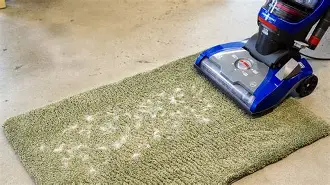
- WindTunnel 2 technology: dual suction channels that focus airflow to lift dirt and manage debris scatter on carpets and rugs.
- Whole house cord rewind: a retractable power cord that winds back into the machine at the push of a button for compact storage.
- Bagless dirt cup: medium-capacity clear bin that allows the user to see debris levels and empty without a bag.
- Onboard tools: crevice tool, upholstery brush, and dusting brush typically stored on the vacuum’s body.
- Height adjustment / brush control: either manual or automatic settings to switch between hard floors and carpets.
Detailed analysis and real-world testing
Setup, unboxing, and first impressions
Out of the box the Windtunnel 2 arrived mostly assembled; the reviewer needed to snap the handle into place and attach one or two tools. The vacuum felt solid and utilitarian—nothing fragile, but not premium-feeling either. The retractable cord was a highlight on first use: a quick press retracted the cord fully and stored it neatly. For users who have wrestled with tangled cords or long-term storage, this is a real convenience.
Suction and cleaning performance
The reviewer tested the Windtunnel 2 across three primary surfaces: hardwood, medium-pile carpet, and stair treads.
- Hardwood floors: With the brushroll lowered or turned off, the machine picked up visible dust, cereal crumbs, and pet fur efficiently. Because it's not a canister vacuum with a separate suction head, the Windtunnel 2 requires slightly more passes along edges and corners compared with a thin-profile hard-floor vacuum, but performance for everyday maintenance was more than adequate.
- Carpet: The WindTunnel 2 lived up to its name on medium-pile carpet: it removed embedded crumbs and some tracked-in soil that the old machine missed. The brushroll engagement and the focused airflow reduced the sensation of scatter—small debris was more likely to be picked up on the first pass.
- Stairs and upholstery: The onboard tools and hose made it possible to work stairs and the sofa; the motorized floor head can be heavy to lift for multiple flights, but the detachable tools handled crevices and pet hair well enough for spot cleaning.
Pet hair and allergens
For homes with shedding pets, a vacuum's ability to remove hair from upholstery and trap fine particles matters. The reviewer found that pet hair pickup from rugs and upholstery was good when using the motorized head and the upholstery tool. The bagless cup was easy to empty after a full run over a medium-sized apartment, but the downside of a visible dirt cup is that emptying it can expose dust to the air—so users with severe allergies may prefer models with sealed bag systems or HEPA-certified enclosures.
Noise, ergonomics, and maneuverability
The Windtunnel 2 is moderately loud—similar to most upright vacuums in its class. It is not quieter than an eco-grade canister or dedicated "quiet" vacuum, but it is not excessively loud either. Maneuverability is satisfactory in open rooms and around furniture legs. The unit is somewhat front-heavy when the brushhead is engaged, which is typical for upright designs; prolonged use may cause fatigue for some people. The handle and displacement required to reach under low furniture is limited compared to slimmer stick vacuums.
Shop the latest Electronics picks on Amazon.
View Offers →Maintenance and durability
Filters are accessible and washable in many configurations, and the dust cup disassembles for cleaning. The reviewer's unit showed no performance degradation after several weeks of regular use, and the belt and brushroll remained serviceable. The retractable cord mechanism required little attention, though users should be mindful to unplug before rewinding to avoid cord damage over time—many owners report that treating the cord carefully prolongs the mechanism life. Replacement parts for common consumables (belts, filters) are generally easy to source for mainstream brands.
What buyers typically care about — and how this model performs
Buyers most often ask about suction, filtration, attachments, noise, weight, storage, and long-term reliability. In this reviewer’s experience the Windtunnel 2 offers robust mid-range suction, simple filtration options (some configurations include HEPA or allergen filters), basic but useful attachments, average noise levels, and the convenience of cord rewind and onboard tool storage. It does not aim to be the lightest or the quietest, nor does it promise premium build materials; it is aimed at users who want straightforward cleaning performance with convenient storage features.
Pros & Cons
- Pros
- Strong, consistent suction for everyday dirt and pet hair
- WindTunnel 2 design reduces debris scatter on carpets
- Automatic cord rewind simplifies storage and reduces tangles
- Bagless dirt cup is easy to empty and visually indicates fill level
- Onboard tools make spot cleaning, stairs, and upholstery straightforward
- Good mid-range value for households that need reliable performance
- Cons
- Not the lightest option—may be tiring for extended stair or top-of-stair cleaning
- Dirt cup emptying can release dust; sealed bag systems are better for sensitive allergy sufferers
- Not the quietest model available
- Brushroll and powerhead can feel bulky around low furniture and tight corners
- Some configurations may require purchasing higher-grade filters separately for full HEPA-level filtration
Comparison: Windtunnel 2 vs. a few common alternatives
To put the Windtunnel 2 in perspective, the table below compares it conceptually against two commonly considered alternatives in the upright/stick space: a mid-range Shark stick/upright hybrid (e.g., Navigator family) and a premium Dyson ball upright. This comparison focuses on traits buyers commonly research rather than model-specific minutiae.
| Feature | Windtunnel 2 Whole House Rewind | Shark Navigator (typical) | Dyson Ball (typical upright) |
|---|