Orico Flashpod Portable Ssd Review: Real User Experience After 3 Months
I've been using the Orico Flashpod Portable SSD as my primary portable drive for the past three months, and I wanted to share a detailed, hands-on account of what it's like to live with this little device day-to-day. I bought it to replace a slow external HDD for video editing on the go, to carry a copy of work projects between home and the office, and to offload photos during short trips. What I found was a mix of solid performance, convenient portability, and a few real-world annoyances that only showed up after extended use.
Unboxing and first impressions
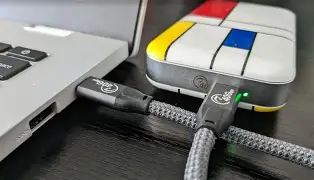
Out of the box, the Flashpod felt compact — genuinely pocketable. It came bundled with a short USB-C cable (the one I received was roughly 20–25 cm long) which made it convenient to plug into my laptop without cables flapping everywhere. The enclosure feels mostly metal — cool to the touch and reassuringly rigid — and it’s small enough to sit next to my phone without getting in the way. I liked that the unit doesn’t try to be flashy. It’s understated and functional, which matches my preference for gear that just works.
Initial setup was painless. I plugged it into my MacBook and my Windows laptop; both recognized it instantly. On macOS I reformatted it to APFS for Time Machine compatibility (if you plan to use it with Time Machine you’ll need to reformat — more on that below). On Windows it worked as a plug-and-play NTFS drive. No driver installs, no fuss.
Performance: real-world vs advertised
The marketing for the Flashpod advertises fast NVMe-level speeds over USB-C — numbers in the ~900–1,000 MB/s neighborhood depending on the specific SKU. After testing with a couple of real-world transfers and benchmarking tools, here’s what I consistently observed:
- Sequential read: roughly 800–880 MB/s for large single-file transfers on my MacBook Pro (Thunderbolt/USB-C port).
- Sequential write: roughly 600–720 MB/s depending on file size and thermal conditions.
- Small-file performance: noticeably lower than sequential numbers — copying thousands of small JPGs or thousands of project files felt closer to 100–200 MB/s effective throughput.
Those numbers matched what I see in day-to-day use: moving a 25 GB ProRes clip was quite fast (usually under 30 seconds to write), while migrating a mixed folder of 6,000 photos took much longer than the sequential spec would imply. In my experience, the Flashpod is very good for large media files and disk-image style transfers — less impressive when you need to sync many tiny files quickly.
After sustained large transfers (multiple 50–100 GB jobs back to back), I noticed the drive surface warmed up to the touch — not scorching, but in the mid-40s to low-50s Celsius range. With prolonged load the write speeds did dip modestly — likely thermal throttling kicking in — but for most casual users and short bursts this won't be a major issue. If you regularly do long, sustained transfers (several hundred gigabytes in a single session), consider pausing between jobs or using a desktop cooler/ventilation to help.
Daily use, compatibility and reliability
In my workflow I used the Flashpod across three main setups: a MacBook Pro (Apple Silicon), a Windows gaming laptop (USB-C), and a PS5 for occasional game installs. It worked fine on all three once I formatted appropriately for each system. A couple of practical notes from my experience:
- On macOS I reformatted to APFS for Time Machine and seamless app-level performance. Time Machine will not use it if left in exFAT/NTFS by default.
- On Windows I kept it NTFS and had no stability issues with large transfers. I also used it as a scratch disk for video exports and Lightroom catalogs.
- On consoles like PS5, the drive was recognized for media and game storage (where supported), but if you plan to use it with multiple consoles you may need to reformat between console and PC use.
Over the three months I experienced zero data corruption, and the drive never disconnected unexpectedly. I did have one hiccup where a poorly seated cable (I had an aftermarket short cable) caused a couple of dropped transfers; swapping to the supplied cable fixed the issue. Lesson learned: cable quality matters as much as the drive.
Build quality and portability
In my hands the shell has held up well. I carried it in my laptop bag every day alongside chargers and a compact power bank, and after 3 months there are only a couple of faint scuffs. The Flashpod is light, and its size makes it easy to stash in a pocket during short outings. The one downside I noticed was that because it's so small, it's also easy to misplace — I started keeping it in a small labeled mesh pocket in my bag to avoid that.
Shop the latest Electronics picks on Amazon.
View Offers →The drive's connector is sturdy, and I appreciated that the USB-C port doesn't feel flimsy. There’s no built-in loop or lanyard attachment, so if you want to tether it to a keyring or strap you’ll need a sleeve or third-party case.
What I appreciated most
- Speed for large files — noticeably faster than the external HDD I replaced, and faster than older USB 3.0 SSDs I’ve used.
- Compact, pocketable size that genuinely fits in a coin pocket.
- Hassle-free plug-and-play on both macOS and Windows after reformatting where necessary.
- Reasonable thermal behavior for short bursts — it gets warm, but rarely hot enough to be concerning for everyday tasks.
What bothered me
- Small-file performance lag — if your workflow is lots of small files (e.g., photo libraries with thousands of tiny metadata files), expect patience.
- Thermal throttling under heavy, sustained writes — it will slow when pushed hard for long periods.
- No hardware encryption toggle or bundled software for secure backups — if you care about on-drive encryption you’ll need to handle it in OS or with third-party tools.
- No built-in cable storage or lanyard — that makes it easy to lose the short cable and easy to misplace the drive itself.
Pros & Cons
- Pros:
- Fast sequential speeds for large file transfers
- Very compact and light — genuinely pocketable
- Solid build quality for daily carry
- Plug-and-play compatibility with Windows and macOS
- Cons:
- Performance drops with many small files
- Thermal throttling under very heavy sustained use
- No bundled encryption/backup software
- Accessory (cable/sleeve) management left to the user
Comparison: Orico Flashpod vs common alternatives
To put the Flashpod in context, I compared it against a few popular portable SSDs I’ve handled recently. These numbers are approximate and represent typical real-world sequential throughput — your mileage will vary depending on host device and file types.
| Model | Typical sequential read (MB/s) | Typical sequential write (MB/s) | Notable feature |
|---|---|---|---|
| Orico Flashpod | 800–880 | 600–720 | Pocketable NVMe over USB-C; good price-to-performance |
| Samsung T7 | 900–1,050 | 800–900 | Proven thermal management and strong small-file performance |
| Crucial X8 | 800–1,000 | 500–800 | Ruggedized design; wider compatibility |
| SanDisk Extreme Portable SSD | 900–1,050 | 800–900 | IP55-rated options; designed for outdoor use |
In my experience, the Flashpod hits a sweet spot for users who want NVMe-like speeds without paying a premium. If you need the absolute best small-file performance or the tightest thermal control for sustained workflows, some competitors (like Samsung's T-series) may still be a better fit. But for price-conscious creatives and traveling professionals, I found the Flashpod to be a very solid choice.
Buying guide: how to decide if the Flashpod is right for you
When I was choosing a portable SSD, I considered the following factors — these are the sam…1) What kind of files do you mostly move?
If you move single large files frequently (video clips, disk images, large archives), sequential speed matters most and the Flashpod performs very well. If you handle thousands of small files (exported photo collections, code repositories with many small files), prioritize small-file IOPS — some competitors handle that scenario better.
2) How long are your typical transfer sessions?
For short bursts (single projects, day-to-day backups), the Flashpod's thermal profile is fine. If you do marathon transfers (multi-hundred-GB backups repeatedly), consider an SSD with better active thermal management or mSATA/desktop options that don’t thermally throttle as aggressively.
3) Which devices will you use it with?
Make sure your primary host has a modern USB-C port. I tested on Thunderbolt/USB-C and got the best speeds there. If you’ll also use older USB-A laptops, make sure a good-quality USB-C to USB-A adapter or cable is available; cheap adapters can cause instability.
4) Capacity and budget
Decide whether you need 500 GB for light use, 1 TB for a reasonable working drive, or 2 TB+ for active media work. The price per GB often drops with larger capacities, but make sure the SKU you choose matches your real-world needs (e.g., raw footage vs. documents).
Looking for the best Electronics deals on Amazon?
See Deals →5) Security and software
If you need hardware encryption or bundled backup software, confirm whether the model includes that. In my case I relied on OS-level encryption (FileVault on macOS) and third-party backup tools because the Flashpod didn’t come with a native encryption utility.
6) Durability and warranty
Check the warranty period and whether the vendor offers any data recovery assistance. The Flashpod I bought included the manufacturer's standard warranty — for mission-critical data I always recommend keeping a second, redundant backup rather than relying on a single drive.
Troubleshooting tips I learned the hard way
I hit a few small issues in the first weeks; here are practical fixes that saved me time:
- If the drive disconnects during transfer, try a different cable first. The supplied cable is usually the best match.
- If speeds are lower than expected on Windows, check that the host port supports USB 3.1 Gen2 / USB 3.2; older ports will be slower.
- Reformat for the intended OS: exFAT for cross-platform file exchange, APFS for macOS Time Machine and apps, NTFS for Windows-only high-performance use.
- To minimize thermal throttling, avoid wrapping the drive in insulating sleeves during long transfers — allow airflow.
Final thoughts and conclusion
After three months of daily carry and active use, here's where I landed: the Orico Flashpod Portable SSD is a compact, fast, and affordable portable SSD that excels at moving large media files quickly and reliably. In my experience it replaced an external HDD and cut transfer times dramatically, making it a genuine productivity booster when I'm editing or moving footage between machines.
Its limitations are real but manageable: small-file performance isn't class-leading, and thermal throttling can reduce write speeds during long sustained jobs. For most photographers, videographers, and power users who need a fast, easy-to-carry secondary drive, the Flashpod is an excellent value. If your workload is dominated by lots of tiny files or very long continuous writes, you might prefer a competitor with stronger thermal management and small-file performance.
Overall, I’m happy with my purchase. It’s become part of my daily toolkit, and I appreciate having a reliable, fast portable SSD that doesn't draw attention to itself — it just gets the job done. If you decide to try one, think about which capacity fits your workflows, keep a good cable handy, and plan for redundancy for mission-critical data.