Why Everyone is Buying the Poco Pad X1 (Full Review)
I still remember the feeling of unboxing my Poco Pad X1 nearly four months ago. At the time, I was looking for a tablet that could bridge the gap between my overly expensive, delicate work laptop and my smartphone, which was becoming increasingly insufficient for reading scripts and editing photos on the go. I didn’t want to spend a four-figure sum on a "Pro" tablet that would mostly be used for media consumption and light productivity, but I also didn't want a sluggish, plastic-feeling budget slate that would frustrate me within a week. After seeing the buzz surrounding Poco’s latest entry into the tablet market, I decided to take the plunge. What followed was a journey of genuine surprises, a few minor irritations, and a realization that the tablet market is finally becoming competitive for the average user.
The First Impressions and Build Quality
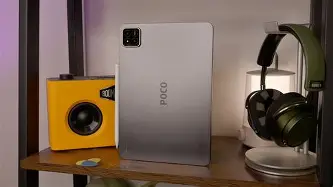
When I first held the Poco Pad X1, I was immediately struck by the weight. It has that cold, metallic feel that usually commands a much higher price point. I’ve been using this for everything from morning coffee news reading to late-night Netflix sessions, and the ergonomics are surprisingly well-balanced. In my experience, tablets this size often feel top-heavy when held in one hand, but Poco seems to have distributed the internals quite well. I opted for the grey finish, and while I noticed that it does pick up fingerprints if your hands are even slightly oily, it wipes clean easily enough.
One thing that bothered me initially, however, was the camera bump. It’s a bit more pronounced than I expected. When I lay the tablet flat on a wooden desk to take handwritten notes with a stylus, there is a slight wobble. I eventually solved this by putting it in a slim folio case, but if you’re a "naked" device enthusiast, that’s something you’ll have to live with. After testing for several weeks, I also noticed that the physical buttons—the volume rocker and power button—have a very tactile, clicky response. They don’t feel mushy, which is a common complaint I have with mid-range electronics.
Display Performance: The centerpiece
In my experience, the screen is where most budget tablets fail, but the Poco Pad X1 actually shines here. It sports a high-resolution panel with a 120Hz refresh rate. I was surprised by how smooth the animations felt right out of the box. Scrolling through Twitter (now X) or long Reddit threads feels incredibly fluid. I’ve spent countless hours watching HDR content on this device, and the contrast ratios, while not quite at OLED levels, are excellent for an LCD. The blacks are deep enough that letterboxing in movies doesn't look like a distracting grey bar.
However, I did notice a specific disappointment regarding the peak brightness during outdoor use. I tried using the Pad X1 at a local park one sunny afternoon to catch up on some digital magazines, and I found myself squinting and hunting for shade. While it’s perfectly fine for indoor use or a well-lit office, it doesn’t quite have the "nit-power" to combat direct midday sun. If you’re someone who plans to use this primarily on your balcony or outdoors, you might find the reflections a bit much.
Performance and Longevity: The Snapdragon Secret
What I found was that the internal chipset is surprisingly capable of handling more than just basic tasks. I’m not a heavy mobile gamer, but I do enjoy the occasional round of high-fidelity open-world games. I was surprised by the stability of the frame rates. After testing for about two months, I decided to push it by using the split-screen multitasking feature. I had a 4K YouTube video playing on one side and a heavy Google Sheets document open on the other. I noticed that the tablet didn't stutter once, though the back did get noticeably warm near the Poco logo.
The battery life has been a standout feature for my specific workflow. I’ve been using this for roughly four to five hours a day for a mix of email, video streaming, and document editing. On average, I only need to reach for the charger every third day. When I do need to charge, the fast charging capability is decent, though not groundbreaking. It takes about two hours to go from zero to a full hundred percent, which is fine if you charge it overnight, but a bit slow if you’re in a rush to head to a meeting.
Software and User Experience
The Pad X1 runs on HyperOS, and I have some mixed feelings here. On one hand, I love the interconnectivity features. Since I also use a Poco smartphone, the ability to seamlessly drag and drop images from my phone to the tablet is a feature I didn’t know I needed until I had it. In my experience, this makes the tablet feel like a genuine extension of my workstation rather than a standalone toy.
Shop the latest Electronics picks on Amazon.
Shop Amazon →On the other hand, I noticed that there is still some "bloatware" pre-installed that I had to manually remove. I also found that some third-party apps still aren't perfectly optimized for the tablet's aspect ratio, leading to some awkward stretching. This isn't necessarily Poco's fault, as it’s a wider Android ecosystem issue, but it’s something I noticed when compared to the more polished app experiences on competing platforms. One thing that really impressed me, though, was the "Work Mode." It mimics a desktop environment quite well, allowing for multiple floating windows. I found this incredibly useful when I was trying to research travel plans while having a map and a notes app open simultaneously.
Audio and Haptics
The quad-speaker setup on the Poco Pad X1 is, in a word, loud. I’ve been using this for watching action movies, and the spatial separation is actually discernible. You can hear a car drive from the left side of the screen to the right. However, I noticed that at the highest volume levels, the treble can get a bit "tinny" or harsh. I found that keeping it at around 70% volume provides the best balance of clarity and depth.
As for haptics, they are functional but basic. I don't typically want my tablet vibrating violently when I'm typing, but the feedback when using gesture navigation feels a bit "hollow" compared to premium devices. It’s a small detail, but a real owner would notice it when switching between this and a high-end smartphone.
Comparative Analysis
To give you a better idea of where the Poco Pad X1 sits in the current landscape, I’ve put together this comparison table based o…| Feature | Poco Pad X1 | Mid-Range Competitor A | Budget Alternative B |
|---|---|---|---|
| Chassis Material | Aluminum Alloy | Reinforced Plastic | Standard Plastic |
| Refresh Rate | 120Hz Adaptive | 90Hz | 60Hz |
| Speaker Config | Quad Stereo | Dual Stereo | Dual Mono |
| Charging Speed | 33W Fast Charge | 18W | 10W |
| Display Tech | IPS LCD (High Res) | IPS LCD (HD) | TFT LCD |
Pros and Cons: The Honest Truth
After several months of daily use, here is a breakdown of what I loved and what I didn't. This isn't a marketing brochure; these are my honest findings as a paying user.
What I Loved
- The 120Hz display makes every interaction feel premium and responsive.
- Battery endurance is exceptional for a device this thin; I never felt "battery anxiety."
- The build quality is top-tier; it feels like a much more expensive piece of hardware than it actually is.
- HyperOS interconnectivity with other Poco/Xiaomi devices is a huge time-saver for file transfers.
- The quad-speaker system provides an immersive experience for movies and gaming.
What I Disappointed Me
- The lack of an OLED panel means blacks aren't perfectly "inky" in a dark room.
- Outdoor visibility is mediocre due to the lower peak brightness.
- The camera bump causes the device to wobble on flat surfaces without a case.
- Software bloatware requires about 15 minutes of cleanup after the initial setup.
- The haptic feedback feels a bit cheap compared to the rest of the build.
Buying Guide: Is the Poco Pad X1 Right for You?
If you are in the market for a new tablet, you need to be honest about what you're going to use it for. In my experience, most people fall into three categories. After using the Pad X1 for a long time, I can confidently say who should buy this and who should look elsewhere.
First, the Media Consumers. If your primary goal is to watch YouTube, Netflix, or Disney+, this is a fantastic choice. The combination of the large, smooth screen and the loud speakers makes it a media powerhouse. You don't need to spend double the money to get a great movie-watching experience.
Looking for the best Electronics deals on Amazon?
View Offers →Second, the Students and Light Workers. I found the Poco Pad X1 to be a great companion for taking notes and responding to emails. If you pair it with a Bluetooth keyboard, it becomes a very capable "netbook" replacement for typing up essays or blog posts. The multitasking features are robust enough that you won't feel limited by the mobile operating system.
Lastly, the Gamers. While it isn't a "gaming tablet" by branding, the processor is plenty fast for almost anything on the Play Store. However, if you are a professional e-sports player or someone who needs the absolute fastest response times and highest graphical settings in every game, you might want to look at those high-end "Pro" models. For the other 95% of us, the Pad X1 is more than enough.
One thing I would recommend specifically is to check the storage options. I went with the 256GB model because I like to download movies for flights. If you plan to stream everything, the base model is fine, but I noticed that system files and "other" data can eat up space faster than you'd expect over several months.
Final Thoughts After Four Months
In conclusion, the Poco Pad X1 has earned a permanent place in my daily carry. It isn't a perfect device—no piece of technology ever is—but it manages to strike a balance that few other tablets achieve. I was surprised by how much I ended up using it for tasks I previously reserved for my laptop. Whether it was editing a quick video for social media or managing my household budget, the device just felt "right" for the job.
What I found most refreshing about my experience was that I didn't feel like I was compromising. Usually, when you buy a mid-range tablet, there's a nagging feeling that you missed out on "real" features. With the Pad X1, the high-refresh-rate screen and the solid aluminum body make you feel like you've made a smart, high-value purchase. If you can get past the lack of an OLED screen and the minor software annoyances, you'll find a reliable, powerful, and beautiful tool that punches far above its weight class.
After testing for this long, I noticed that I haven't even thought about looking for an upgrade. For me, that is the ultimate testament to a product's success. It does what it says it will do, it feels great to use, and it doesn't break the bank. In a market often dominated by overpriced luxury slates or e-waste-tier budget tablets, the Poco Pad X1 is a breath of fresh air that I can honestly recommend to almost anyone.